
In luxury packaging, every element contributes to shaping how a brand is perceived. A custom ribbon does more than serve a decorative purpose: it forms part of the unboxing experience and conveys quality, consistency and visual identity.
However, the final result does not depend solely on the logo design. The material, type of weave, colour, customisation technique and technical finishes all influence both the appearance of the ribbon and how it performs during application.
Choosing each of these aspects carefully makes it possible to develop a solution that meets both the brand’s visual requirements and the functional needs of the packaging.
Materials, weaves and finishes also communicate
Even before discovering the product, the customer has already interacted with the packaging. They have touched the box, experienced the materials, untied the ribbon and noticed the care given to every detail of the presentation.
The custom ribbon plays an active role in this experience.
However, the impression it creates does not depend on one specific finish alone. It is the result of combining the chosen material, type of weave, customisation technique and finishes applied during manufacturing.
Each of these elements influences the brand’s final image and the perceived quality of the product.
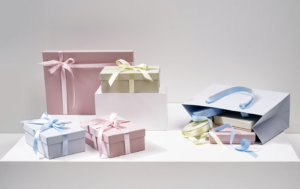
What factors define the final result?
Developing a custom ribbon for a luxury packaging project requires several variables to be considered.
Material
The choice of raw material determines both the appearance and performance of the ribbon. Polyester, cotton, linen, nylon, recycled polyester and organic cotton offer different properties and aesthetics depending on the application and the brand’s positioning.
Type of weave
The weave determines much of the ribbon’s visual appearance and feel.
Satin provides a smooth, glossy surface that conveys elegance. Grosgrain offers a ribbed texture with greater visual presence. Taffeta delivers a clean, balanced appearance, while velvet adds depth and sophistication. Herringbone introduces a more handcrafted character, while organza provides lightness and transparency when required by the design.
Physical characteristics
Width, thickness, flexibility, drape and strength directly affect how the ribbon performs during use, particularly when it needs to be tied into bows, wrapped around boxes or adapted to different packaging formats.
Customisation
The choice of corporate colour, the definition of the logo and the printing technique all influence the visual quality of the final result and its consistency with the brand identity.
Technical finishes
In addition to its aesthetic appearance, a custom ribbon can incorporate different technical finishes depending on its intended application, including water-repellent, flame-retardant, adhesive-backed or perforated treatments, as well as cutting to specific sizes.
Combining all these factors makes it possible to develop a solution that is fully adapted to each project.
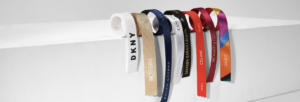
Gloss, texture and customisation techniques
A ribbon’s sheen is not always the result of an additional finish. In many cases, it is determined by the weave itself.
Satin offers a glossy, silky surface, while grosgrain has a more pronounced texture and a more understated appearance. Velvet creates a sense of depth and exclusivity, while cotton conveys a more natural image.
The customisation technique also influences the final result.
Screen printing makes it possible to achieve highly precise results and can be applied with a flat, raised or metallic finish. When a design requires a wide colour range or includes complex graphic elements, digital printing provides excellent design reproduction.
The choice of technique will depend on the material, weave, design and specific requirements of each project.
Request a custom sample for your next project.
The importance of manufacturing the ribbon from the outset
The customisation potential of a ribbon does not depend solely on the printing process.
When the manufacturer controls every stage of production in-house — spinning, warping, weaving, dyeing, customisation and finishing — each characteristic of the ribbon can be adapted to the project’s requirements.
This comprehensive control makes it possible to reproduce corporate colours more accurately, ensure consistent quality throughout production and provide fully customised solutions for every brand. It also offers greater flexibility when developing exclusive projects and ensures complete traceability throughout the manufacturing process.
How to choose the best combination for each brand
Every sector has different requirements.
A fashion brand may look for a ribbon with an elegant drape, a sophisticated feel and highly defined logo reproduction.
A cosmetics brand will often prioritise colour accuracy, fabric softness and a refined presentation.
For gourmet food or delicatessen products, materials with a natural appearance or weaves that convey authenticity and closeness may be more suitable.
The application system must also be considered.
A ribbon intended for hand-tied bows does not have the same requirements as one designed for automated packaging processes. Strength, dimensional stability and flexibility may be essential to ensure correct performance throughout the packaging process.
For this reason, there is no universal solution. The best custom ribbon is one that successfully combines the material, weave, customisation technique and finishes in line with the brand identity and the technical requirements of the project.
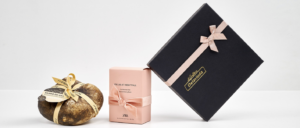
Manubens: fully integrated manufacturing and specialist technical guidance
At Manubens, we manufacture custom ribbons while controlling every stage of the production process in-house: spinning, warping, weaving, dyeing, printing and finishing.
This vertical integration allows us to advise brands, agencies and design departments from the earliest stages of a project, recommending the most suitable combination of materials, weaves, customisation techniques and finishes for the intended application.
Our colour laboratory ensures the accurate reproduction of corporate colours, while our experience in narrow fabrics allows us to adapt each ribbon to the aesthetic, technical and functional requirements of every project.
With more than 90 years of experience, we combine textile tradition, technical expertise and innovation to develop custom ribbons that add value to the packaging of luxury, cosmetics, fashion, gourmet food, jewellery and premium gifting brands.
Are you developing a custom ribbon for your packaging?
Choosing the right materials, weave, customisation technique and finishes makes it possible to create a ribbon that not only enhances the packaging, but also strengthens the brand identity and improves the customer experience.
At Manubens, we support our customers throughout the entire development process to find the solution best suited to each project.
Contact our team and discover how we can help you develop a custom ribbon for luxury packaging.