
In premium packaging, a good idea is not measured only by how it is imagined, but by how it reaches the final result. Between the creative concept and production, there is a decisive space. It is there that a brand intention is translated into material, colour, texture, proportion, finish and detail. And it is also there that an idea can gain presence or lose part of its strength.
For luxury brands, this journey is especially important. A ribbon, a box, a bag or a case are not merely functional elements. They are part of an experience. They build perception. They accompany the purchase gesture, the moment of opening and the tactile memory associated with a brand.
That is why, in a premium packaging project, the creative briefing should not remain only an aesthetic direction. It must connect intention, technique and production so that the final result preserves all its value.
A good idea needs good execution
Every creative idea is born with an intention: to convey elegance, sobriety, innovation, heritage, naturalness, exclusivity or closeness. But that intention only holds if the execution is up to the task.
In the world of luxury, detail is not decorative. It is language. The proportion of a ribbon, the feel of a material, the shine of a finish or the precision of a colour can completely modify the perception of the whole.
A ribbon that is too rigid can break the delicacy of a box. A slightly shifted colour can move away from the brand’s visual universe. A poorly legible logo can weaken the presence of the design. An excessively shiny finish can convey a feeling different from the one intended.
Production, therefore, is not a secondary phase. It is an essential part of the creative process. A good idea needs good execution to become a coherent brand experience.
The creative briefing: where coherence begins
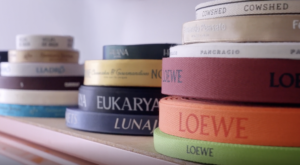
A good briefing is the first step to ensuring that a personalised ribbon reaches production successfully. The more precise the initial information, the easier it is to make technical decisions aligned with the brand intention.
In personalised ribbon projects for packaging, the briefing should consider aspects such as:
1. Product type and sector
Working for a fashion maison is not the same as working for a perfumery, jewellery, wines & spirits, gourmet or accessories brand. Each sector has its own visual codes, experience expectations and levels of requirement.
2. Brand universe
The brand’s style, colour palette, visual tone, positioning and references help define which type of ribbon can best fit within the whole.
3. Use of the ribbon
The ribbon may close a box, accompany a bag, wrap a case, highlight a special edition or reinforce a specific campaign. Its function determines the material, width, finish and resistance required.
4. Material, colour and finish
This is where one of the most important decisions begins. The choice between a woven, satin, cotton, recycled polyester ribbon or one with a more natural texture is not only technical. It is also perceptive.
5. Level of personalisation
Logo, graphic motif, message, embossing, repetition, contrast or chromatic integration. Personalising does not mean adding more elements, but choosing with greater precision.
6. Quantities, timings and sustainability requirements
In premium projects, feasibility is also part of success. Anticipating quantities, timings and technical or environmental requirements makes it possible to adjust expectations from the outset.
CONTACT US FOR PERSONALIZED CONSULTATION
From design to material: when the idea begins to take shape
In luxury packaging, material is never neutral.
The texture, weight, drape and feel of a ribbon are part of the brand narrative. A ribbon with a natural texture can convey authenticity, sobriety or sensitivity towards the origin of materials. A satin ribbon can bring luminosity, softness and a more classic presence. A woven ribbon can reinforce the perception of permanence, detail and savoir-faire. A solution in organic cotton or recycled polyester can connect with a growing demand for durability and responsibility.
The choice of material should not be made at the end of the process, as a simple technical adaptation of the design. It should be part of the creative conversation from the beginning. Because the same idea can change radically depending on the support that materialises it.
Colour, finish and detail: decisions that modify perception
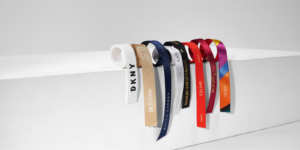
In a personalised ribbon, small decisions have a direct impact on the final result. The intensity of the colour, the contrast between background and logo, the level of shine, the definition of the weave, the thickness, the drape, the softness to the touch or the way in which the ribbon integrates with the box or bag can reinforce or weaken the whole.
a. The importance of colour
In premium brands, colour is rarely approximate. It is part of the visual identity and must be respected with rigour. A tone that is colder, warmer, more muted or brighter can modify the perception of the packaging.
b. Logo legibility
Personalisation must be visible, but it must also feel integrated. The size, repetition, contrast and technique used all influence the reading of the logo or graphic motif.
c. The finish as the final gesture
Matte, satin, embossed, more natural, more technical, more sober or expressive. The finish does not only define the appearance of the ribbon. It also defines how the brand is perceived when touched. A personalised ribbon should not decorate without purpose. It must integrate into the visual language of the packaging and act as a natural extension of the brand.
Technical support to avoid losing intention
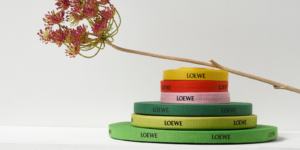
Many deviations appear when the design is approached without taking production possibilities into account. An idea may be visually attractive, but it may require adjustments to be viable, legible, resistant or coherent in production.
That is why having a technical partner from the earliest stages helps avoid mistakes. It makes it possible to anticipate limitations, review proportions, propose material alternatives, adjust finishes and find the best way to translate a creative intention into a real solution.
This support is especially valuable for brand teams, packaging managers, creative directors and agencies working for premium brands. It is not about limiting creativity, but about protecting it.
When the technical side understands brand sensitivity, the final result gains precision.
Production and brand: the final result also communicates
Production also builds brand. In premium packaging, an imprecise finish, a poorly proportioned ribbon, a misaligned colour or a careless integration can affect the perception of value. Even if the consumer does not always identify the exact reason, they do perceive when a whole is well resolved and when something does not fit.
In this sense, a personalised ribbon can become a visual and tactile signature. A small but recognisable gesture. A way of closing the packaging and, at the same time, reinforcing the brand universe.
Manubens: translating a brand intention into a real ribbon
Since 1934, we have been manufacturing woven and personalised ribbons for different sectors, with an industrial background that today is also focused on developing solutions for premium packaging.
Our value does not lie solely in producing ribbons, but in supporting brands and creative teams throughout the definition process. Material, colour, technique, finish, personalisation and production must dialogue so that the final result responds to the initial intention.
In a market where aesthetic and technical demands coexist, the supplier cannot be just an executor. It must understand detail, material, timings, visual coherence and the brand experience.
That is why the path between creative briefing and production should not be seen as a technical transition, but as an essential part of the brand-building process.
Because a good idea does not end in the design. It ends when every decision — material, colour, finish, touch and execution — manages to sustain it through to the final result.
Are you developing a premium packaging project?
Discover how a personalised ribbon can help you transform a creative idea into a coherent, carefully resolved and distinctive final result.