
London Packaging Week 2026 has once again shown the extent to which packaging has become a strategic element for brands.
This year’s edition brought together more than 6,600 professionals, over 230 exhibitors and more than 110 speakers in London, representing an industry where design, materials, technology, sustainability, regulation and consumer experience increasingly converge.
For premium brands, the message is particularly relevant: packaging is no longer valued solely for its appearance.
Today, it must communicate value, reinforce brand identity, respond to new sustainability requirements and create a coherent experience from the very first contact with the product.
In sectors such as cosmetics, perfumery, fashion, gourmet food, premium beverages and luxury retail, this means looking at every detail with greater intention: materials, textures, finishes, personalisation, efficiency, visual consistency and the opening experience.
At Manubens, we analyse this evolution through four trends that are particularly relevant to premium packaging.
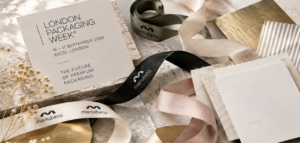
1. Materials that add meaning and value
One of the clearest trends is the growing importance of materials.
The innovation showcased at London Packaging Week confirms the search for solutions capable of combining new presentation formats, efficiency, sustainability and a premium perception. New substrates, lighter materials, mono-material solutions and surfaces with specific visual and tactile qualities show how material is becoming an increasingly active part of design.
In premium packaging, material is not just a substrate. It also communicates positioning, sensibility, origin, innovation and attention to detail.
A box, a bag, a case, a label or a ribbon can change the perception of a product before it is even opened. The touch, weight, texture or drape of a material all contribute to creating a physical and memorable experience.
In this context, textile elements have a particularly interesting role to play. A personalised ribbon can add texture, movement, contrast, colour or softness, while connecting the product with the brand’s visual and sensory universe.
The value of premium packaging lies not only in what we see. It also lies in what we touch.
2. Sustainability that can be demonstrated
Sustainability continues to be one of the major drivers of packaging evolution, but expectations around it are becoming increasingly demanding.
Circularity, efficiency and the evolution of materials are among the key challenges currently facing the industry. Sustainability is increasingly being approached not as an added feature, but as an issue that affects design, materials, manufacturing and the overall viability of packaging.
Responsible language or a natural aesthetic are no longer enough. Brands need solutions they can explain and support with information.
In premium packaging, this balance is particularly important. A more responsible solution should not mean compromising on quality, finish or brand perception.
Sustainability therefore needs to be considered holistically: from the origin and composition of the material to the production process, durability, traceability and manufacturing efficiency.
For a personalised packaging ribbon, this means considering the material, weave, colour, personalisation technique, finish and its performance within the final packaging as a whole.
The challenge is not only to reduce impact. It is to do so in a verifiable way without compromising brand consistency.
At Manubens, this evolution translates into certified materials, documented processes and greater traceability, helping us respond to a market that increasingly demands verifiable information.
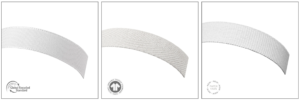
Discover our sustainable solutions
3. More recognisable brand codes
As packaging incorporates new materials, solutions and requirements, brand identity becomes even more important.
Packaging is no longer understood simply as a wrapper. It forms part of a brand’s identity, its perceived value and the creation of memorable moments around it.
Packaging can evolve without losing the codes that make a brand recognisable: its colour palette, materials, level of detail, visual language, finishes and the way the product is presented.
Personalisation is key at this point.
A ribbon can reinforce these codes through colour, weave, texture, finish, logo reproduction or the way it is incorporated into a box, bag or case.
In premium packaging, consistency does not depend on a single element. It is built through small details that, together, create a recognisable and consistent experience.
4. More experiential and connected packaging
Another trend that continues to gain ground is the evolution of packaging as a point of contact between product, brand and consumer.
Packaging no longer simply protects or presents a product. It can inform, tell a story, provide traceability, incorporate interactive elements or extend the brand experience beyond the physical object.
The solutions showcased at London Packaging Week 2026 also demonstrate this shift towards packaging in which design, engineering and materials help turn the opening ritual itself into part of the experience.
At the same time, technologies such as QR codes, digital identification and traceability systems make it possible to connect physical packaging with new layers of information and content.
But this evolution does not make the physical gesture any less important. Quite the opposite.
The more digital our relationship with brands becomes, the more valuable material interaction can become: touching, opening, untying and discovering.
Digital connection can extend the experience. Emotional connection still begins with the physical.
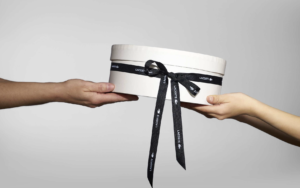
What do these trends mean for premium brands?
The trends observed at London Packaging Week 2026 point towards one common idea: packaging increasingly needs to be designed as a complete system.
It is no longer enough to choose an attractive material, add a logo or incorporate a sustainable solution in isolation.
Every decision needs to work as part of the whole: the product, visual identity, sales channel, opening experience, sustainability, production and consumer expectations.
This requires greater consideration when selecting materials, finishes and personalisation techniques. But it also means thinking about industrial feasibility, consistency of results and coherence between the different packaging components.
Detail is no longer merely decorative. It becomes part of the brand strategy.
The role of ribbon in premium packaging
Within this context, a personalised ribbon should not be seen as an isolated element.
It can connect material, identity and experience through one of premium packaging’s most distinctive moments: opening.
For a fashion brand, it can add presence and movement. For a cosmetics or fragrance brand, delicacy and precision. For a gourmet product, care and attention to detail. And for a limited or seasonal edition, it can become a specific and recognisable visual code.
The key is to develop the ribbon as part of the complete solution: material, colour, weave, texture, finish, personalisation and final application.
When properly considered, a ribbon does more than accompany the packaging. It helps build brand perception and brand experience.
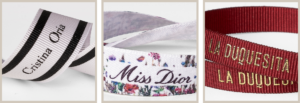
Manubens: textile solutions for evolving packaging
Since 1934, at Manubens we have been developing ribbons that combine industrial capabilities, technical expertise and extensive personalisation possibilities.
Our work on premium packaging projects begins by understanding what each brand needs to communicate and translating it into a specific textile solution: material, weave, colour, finish and personalisation technique.
In addition, integrating the main stages of the production process — warping, weaving, dyeing, printing and finishing — allows us to maintain greater control over quality, reproducibility and traceability throughout every project.
As packaging evolves, small details are taking on a more strategic role. They help reinforce identity, create consistency and build a recognisable brand experience.
Because premium packaging is no longer only visual.
It is material, responsible, recognisable and experiential.
And very often, the first gesture begins with a ribbon.
Are you developing a custom ribbon for your packaging?
At Manubens, we help brands, agencies and packaging teams develop personalised ribbons that bring value, consistency and differentiation to the brand experience.